 Water heating is the third largest energy expense in your home. It typically accounts for about 12% of your monthly bill. There are several ways to cut your water heating bills down use less hot water, turn down the thermostat on your water heater, insulate your water heater, and buy a new, more efficient hot water heater. If you all ready have these things done here are some other tips you can do. Install aerating, low-flow faucets and showerheads. Repair leaky faucets as soon as possible, a leaky faucet waste water and cost you money. Insulate the first 6 feet of the hot and cold water pipes attached to the water heater. Drain a quart of water from your water tank every 3 months to remove buildup that restricts heat transfer and lowers the efficiency of your heater. The type of water tank you have determines the steps to take. Lower the thermostat on your water heater. Usually, water heaters sometimes come from the factory with high temperature settings, but a setting of 120°F provides comfortable hot water for most uses. In my next post I will be discussing solar water heaters and there efficiency.
Tuesday, April 13, 2010
Water heaters
Water heating is the third largest energy expense in your home. It typically accounts for about 12% of your monthly bill. There are several ways to cut your water heating bills down use less hot water, turn down the thermostat on your water heater, insulate your water heater, and buy a new, more efficient hot water heater. If you all ready have these things done here are some other tips you can do. Install aerating, low-flow faucets and showerheads. Repair leaky faucets as soon as possible, a leaky faucet waste water and cost you money. Insulate the first 6 feet of the hot and cold water pipes attached to the water heater. Drain a quart of water from your water tank every 3 months to remove buildup that restricts heat transfer and lowers the efficiency of your heater. The type of water tank you have determines the steps to take. Lower the thermostat on your water heater. Usually, water heaters sometimes come from the factory with high temperature settings, but a setting of 120°F provides comfortable hot water for most uses. In my next post I will be discussing solar water heaters and there efficiency.
Landscaping

Landscaping is a natural and beautiful way to keep your home cool in summer and lower your energy bills. A well-placed tree, shrub, or vine can deliver effective shade, act as a windbreak, and reduce your energy bills. Carefully positioned trees can save up to 25% of the energy a typical household uses for energy. Research shows that summer daytime air temperatures can be 3° to 6° cooler in tree-shaded neighborhoods than in treeless areas. A lattice or trellis with climbing vines, or a planter box with trailing vines, shades the home's perimeter while admitting cooling breezes to the shaded area. So next time you decide to plant trees or redo your landscaping keep in mind that the placement of these plants will affect your energy cost. In my next post I will be talking about different types of water heaters and which ones are more efficient.
Programmable Thermostats
 Using a programmable thermostat, you can adjust the times you turn on the heating or air-conditioning according to a preset schedule. With a programmable thermostat, your equipment doesn't operate as much when you are asleep or when the house, or a part of it, is not occupied. Programmable thermostats can store and repeat multiple daily settings (six or more temperature settings a day) that you can manually override without affecting the rest of the daily or weekly program.
You can save as much as 10% a year on your heating and cooling bills by simply turning your thermostat back 10% to 15% for 8 hours. You can do this automatically by installing an automatic setback or programmable thermostat.In my upcoming post I will be talking about different landscaping ideas to make your house look good and more energy friendly.
Tuesday, April 6, 2010
Air Conditioners
 Purchasing a larger room air-conditioning unit won't necessarily make you feel more comfortable during the hot summer days. In fact, a room air conditioner that's too large for the area it’s supposed to cool will perform less efficiently and less effectively than a smaller, properly sized unit.
Sizing is equally important for central air-conditioning systems, which need to be sized by professionals. If you have a central air system in your home, set the fan to shut off at the same time as the cooling unit. In other words, don't use the system's central fan to provide circulation, but instead use circulating fans in individual rooms.
Thursday, April 1, 2010
Natural Gas and Oil Heating Systems
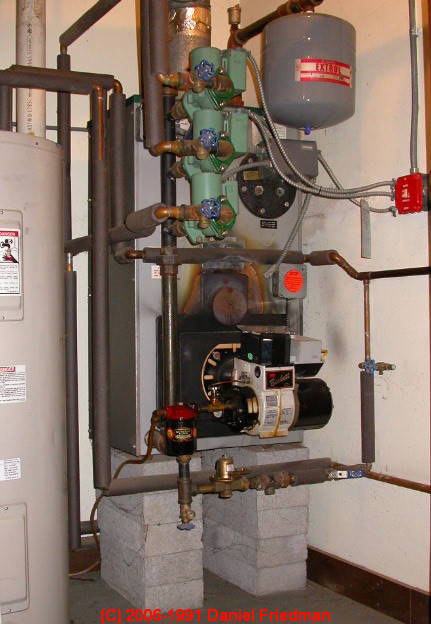
If you are planning to perches a new heating system and chooses gas or oil, ask your local utility provider or state energy office for information on the newest models available to consumers. They can tell you about more efficient systems on the market today. For example, many newer models have incorporate designs for burners and heat exchangers that result in higher efficiencies during operation and reduce heat loss when the equipment is off. Consider a sealed combustion furnace; they are both safer and more efficient.
If you are in the market for a new furnace install a new energy efficient one. Be sure to check the energy star guide. Another thing you should do is install carbon monoxide detectors. This is a deadly gas that can be produced if the furnace malfunctions.
If you are in the market for a new furnace install a new energy efficient one. Be sure to check the energy star guide. Another thing you should do is install carbon monoxide detectors. This is a deadly gas that can be produced if the furnace malfunctions.
Tuesday, March 30, 2010
The Use Of Passive Solar Climate Control
 Using the passive solar design to heat and cool the home can be both environmentally friendly and cost effective. Passive solar heating techniques include placing larger, insulated windows on south-facing walls and locating thermal mass, such as a concrete slab floor or a heat-absorbing wall, close to the windows. In many cases, your heating costs could be more than 50% lower than the cost of heating the same house that does not include passive solar design.
Passive solar design can also help reduce your cooling costs. Passive solar cooling techniques include carefully designed overhangs, windows with reflective coatings, and reflective coatings on exterior walls and the roof.
A passive solar house requires careful design and site orientation, which depend on the local climate. So, if you are considering passive solar design for new construction or a major remodeling, you should consult an architect familiar with passive solar techniques.
Thursday, March 11, 2010
Heat Pumps
 If you are going to use electric heat, a heat pump is the way to go. Heat pumps are the most efficient form of electric heat. Heat pumps produce three times more heat than electricity they consume. Keep in mind that heat pumps are only good for moderate temperatures. If you live in a cold area then you will still need a back up heat.
When going to perches a heat pump keep in mind there are three different types, air to air, water and ground source. These different systems collect heat from air water or the ground, and distribute it through the home. There can be a saving of up to 30 to 40 percent in your electric bill. These units also have an air conditioning unit built in them. They cool your home by pumping the heat out of the home and replacing it with cool air. In my up coming blogs i will be talking about different forms of heating and cooling units.
Subscribe to:
Posts (Atom)

